A Page Turns at Le Cromin: Renewing a Historic Vineyard in Meursault
In Meursault, a new cycle begins at the climat Le Cromin: the oldest part of the parcel is being renewed to welcome a new generation of vines. Why now, how, and what it means — here’s the story.
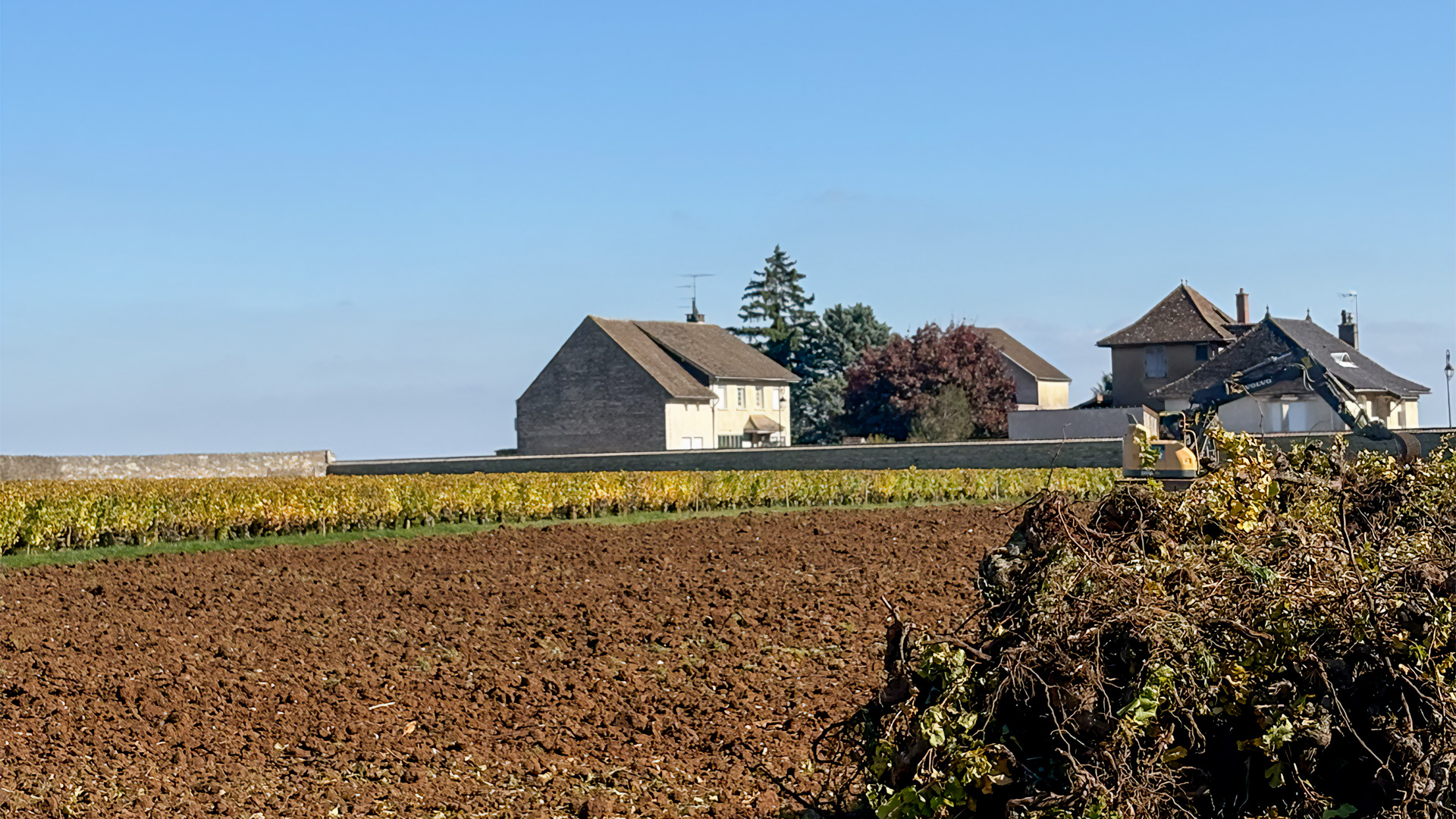
In a vigneron’s life, certain decisions mark a turning point. Renewing a vineyard means accepting that one cycle ends so another can begin — always in service of quality and longevity. At the climat Le Cromin (Meursault), we have begun this process: the targeted uprooting of the oldest vines to prepare for a thoughtful replanting, true to our philosophy of respecting place.
A Bit of History
Before the Second World War, the family’s ancestors had already considered pulling up this old vineyard. Tradition dictated that before uprooting, the vine was pruned “à l’arrache” — leaving a longer cane to increase the yield of the final harvest.
Definition — The cane (baguette):the long vine shoot tied to the wire, which will bear grapes the following year.
Ironically, that vigorous pruning allowed the vines to grow back, and so they were never uprooted… until today.
Context: An Emblematic but Exhausted Parcel
The section of Le Cromin concerned was among the oldest in the village — considered by the family to be Meursault’s oldest, around 140 years old. Planted just after the phylloxera crisis (1878–1880) on riparia rootstock, it was re-established by our ancestors after the epidemic. Over time, despite careful maintenance and the regular removal of dead vines, the missing plants multiplied, and the expression of the terroir diminished. The time had come to open a new chapter. The rest of the parcel remains in place and continues to be farmed and harvested.
A Word from the Grandfather
“My grandfather told me these vines dated from 1878–1880. It’s a page in the domaine’s history that is turning.” — Jean-Claude Monnier
At the Heart of the Domaine, a Family Vineyard
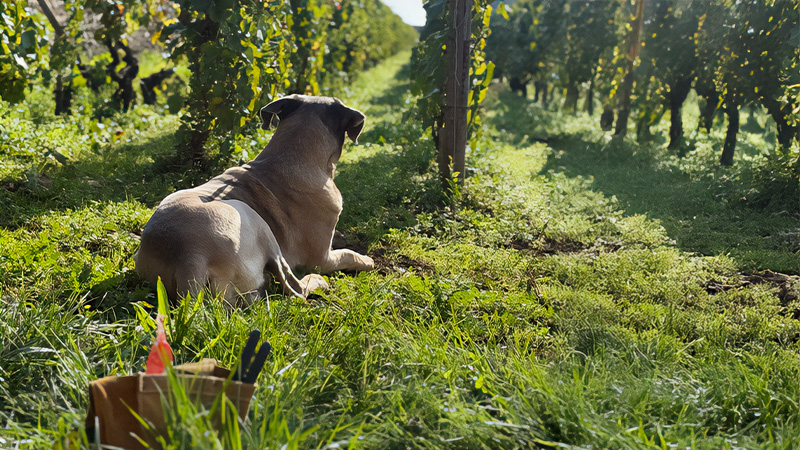
This old Cromin vineyard is the only parcel adjoining the domaine — it connects directly to our buildings. It is as much a place of life as of work, and every family member feels deeply attached to it. Even Rudy, the family dog, visits it daily for a stroll and often keeps the vineyard workers company.
RUDY, THE FAMILY DOG IN LE CROMIN, OCTOBER 2025
Key Facts
Location: Meursault — Climat Le Cromin
Estimated age: around 140 years (planted 1878–1880)
Operation initiated: October 15, 2025
Why Renew a Vineyard?
Quality and consistency: a very old and patchy vine can no longer fully express its climat; replanting restores harmony and coherence to the wine.
Health and longevity: starting anew with healthy, site-adapted vines ensures the parcel’s future.
Fatigue: too many missing vines; the block had grown too old and tired.
Transmission: preparing a new generation of vines that will carry Le Cromin for decades to come.
Why Not Simply Replace the Missing Vines?
At the time, the soil was dug by hand, and the vines were planted without modern alignment tools:
Non-parallel rows, vines not always aligned: with the arrival of tractors, some misplaced vines were pulled out during passes.
Shallow rooting (manual planting): soil work sometimes dislodged the vines.
The annual “ascent” of the vines with pruning: some had become so tall that it was no longer possible to tie the cane to the wire.
The combination of gaps, irregular geometry, and overly tall vines made work increasingly difficult — a full renewal of the oldest section became essential.
How Does a Vineyard Renewal Work?
The 8 Key Steps
Remove the wires and posts.
Prune the vines.
Pull up the vines with a mechanical shovel (replacing tractor subsoiling).
Conduct a soil analysis: assess balance (organic matter, deficiencies, clay/limestone ratio) to determine the cover crop and appropriate rootstock.
Sow a cover crop: grasses or legumes, depending on needs, to maintain soil health and limit nematodes; choosing species suited to the plot.
Allow the soil to rest: at least one full year, until analyses confirm readiness.
Plant the grafted vines: select a rootstock suited to the soil (e.g., limestone tolerance). From planting, allow around 4 years until the first grapes and approximately 5 years for full yields.
Life cycle: the vines will live on average 40 years before renewal.
Current stage at Le Cromin:
Step 3. Soil analysis (Step 4) and cover crop (Step 5) will take place in spring.
The coming months will be devoted to resting the soil and preparing for replanting in the renewed zone. The preserved rows remain in production and continue to be vinified as usual. This long rhythm is part of the Burgundian DNA: taking the time needed for the vine to find its place — so that Le Cromin may once again express its full personality in future vintages.
Indicative Timeline After Replanting
Years 1–2: no harvest; the young vine builds its roots and structure.
Year 3: possible small balancing harvest, if vine health allows.
Years 4–5: first significant volumes and first commercial vintage, depending on vigour and the year’s conditions.
Further reading
See the local press (Bien Public) article on this subject.